
The candy-bowl trap: why quick sugar makes your 4pm brain worse
Most professionals do not need more willpower around office sweets; they need a better default before the craving hits. This guide explains why sugar-only snacks can backfire within the first hour, then gives a five-window sugar-defense framework, four desk-ready Power Snack swaps, and two micro-habits that make better fuel automatic.

Most professionals do not raid the office candy bowl because they lack discipline. They do it because their day has been designed to make fast sugar the easiest available fuel.
The problem: the "quick energy" food usually does not create cleaner energy. A 2019 meta-analysis of 31 studies found that acute carbohydrate intake did not improve mood at any time point and was linked with more fatigue and less alertness within the first hour compared with placebo.1
That is the candy-bowl trap: you are trying to rescue focus, but the rescue food often makes the next hour harder.
⚡ The real issue is speed, not sweetness
Your brain uses glucose, but it does not benefit from a chaotic delivery system. Harvard's Nutrition Source explains the basic sequence: carbohydrate is broken into sugar, blood sugar rises, insulin helps cells absorb that sugar, and blood sugar begins to fall again.2
High-glycemic foods, such as white bread and many sweet snacks, are digested quickly and can produce larger blood sugar swings; lower-glycemic foods, such as oats and legumes, digest more slowly and create a more gradual rise.2
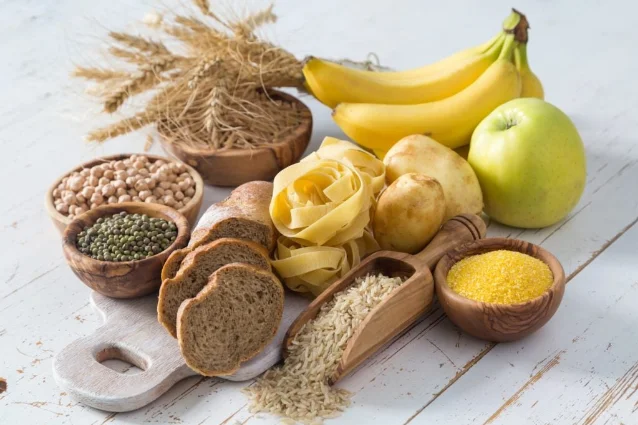
For work performance, that distinction matters. A 2012 randomized crossover study in 40 healthy adults ages 49-71 found that a low-but-sustained blood glucose profile after breakfast improved selective attention later in the post-meal period compared with a high-glycemic white wheat bread control.3
The practical translation is simple: the snack that feels useful in minute 5 can be the snack that makes minute 45 worse.
🧠 Your five-window sugar defense
Do not solve this with a personal rule like "I will stop eating sweets at work." That is willpower advice, and it breaks the moment the calendar gets ugly.
Build a faster default instead:
| Workday window | Where sugar sneaks in | Better structural move |
|---|---|---|
| 7-9am anchor breakfast | Coffee plus pastry, muffin, sweet cereal | Add protein before the sweet item: Greek yogurt, eggs, cottage cheese, or a protein shake |
| 10-11am bridge snack | Granola bar that is mostly sweetener | Pair fruit with fat or protein: apple + peanut butter, orange + almonds |
| 12:30-1:30pm functional lunch | White-flour sandwich plus chips | Eat protein and vegetables first, then the starch |
| 3-4pm strategic snack | Candy bowl, cookie, sweet latte | Use the Power Snack Formula before the craving gets loud |
| 6-8pm recovery dinner | Dessert because lunch and snacks under-fueled you | Make dinner steady: protein + fiber-rich carb + healthy fat |
The goal is not to become sugar-free. The FDA sets the Daily Value for added sugars at 50 grams per day on a 2,000-calorie diet and notes that 20% Daily Value or more is considered high for added sugars on a label.4 The workplace upgrade is to stop letting added sugar be the first and only fuel source when your brain is already under load.
Use the added-sugars line as a friction-reducer: one quick label read can turn a vague "healthy snack" into a clear yes/no default. Image source: FDA.
🥑 The Power Snack Formula beats the candy bowl
Use the same formula this channel comes back to because it works in real offices:
Protein + Fiber + Healthy Fats
Each part slows the situation down in a different way.
A 2022 review on soluble dietary fibers explains that viscous fibers can reduce post-meal glucose response by increasing chyme viscosity, delaying gastric emptying, and slowing glucose absorption in the small intestine.5 A 2018 trial found that eating a protein-enriched, fiber-fortified bar before a high-glycemic meal lowered the 0-180 minute glucose response in both people with type 2 diabetes and people with normal glucose tolerance.6
For your desk drawer, that becomes:
| If you usually grab... | Swap to this | Why it works better |
|---|---|---|
| Chocolate from the candy bowl | Dark chocolate square + almonds | Keeps the ritual, adds fat and protein |
| Sweet granola bar | Low-sugar protein bar + clementine | Separates sweetness from the main fuel source |
| Cookie with coffee | Apple + peanut butter packet | Adds fiber and fat before the caffeine push |
| Sweet latte | Plain latte + pistachios or roasted edamame | Keeps the coffee habit, removes the sugar-only spike |
If the office has no good options, your environment needs a tiny redesign, not a bigger promise.
Two micro-habits that remove the decision
1. Put the "first bite" snack where your hand already goes
Do not hide the good snack in a drawer you never open. Put one Power Snack option next to your laptop bag, keyboard, or coffee setup. Visibility is the system.
The rule: before candy, eat the stabilizer. If you still want the candy 10 minutes later, have it. You are not banning the sweet; you are changing the order.
2. Run the 2pm label check once, not every day
Pick two default packaged snacks and check added sugar once. The FDA label makes this quick: 5% Daily Value or less is low, and 20% or more is high.4 Once you have two acceptable defaults, stop negotiating with the vending machine.
A strong workday fuel system should feel boring in the best way: same shelf, same snack, fewer crashes.
What is your go-to sustained-energy snack when the office candy bowl starts calling?
References
- 1Sugar rush or sugar crash? A meta-analysis of carbohydrate effects on mood
- 2Carbohydrates and Blood Sugar
- 3Effects on cognitive performance of modulating the postprandial blood glucose profile at breakfast
- 4Added Sugars on the Nutrition Facts Label
- 5The Effects of Soluble Dietary Fibers on Glycemic Response
- 6Postprandial glucose-lowering effect of premeal consumption of protein-enriched, dietary fiber-fortified bar
Add more perspectives or context around this Post.